The Ins and Outs of the Best Age for a Mini Facelift
October 1, 2026
When Is the Best Age for a Mini Facelift?
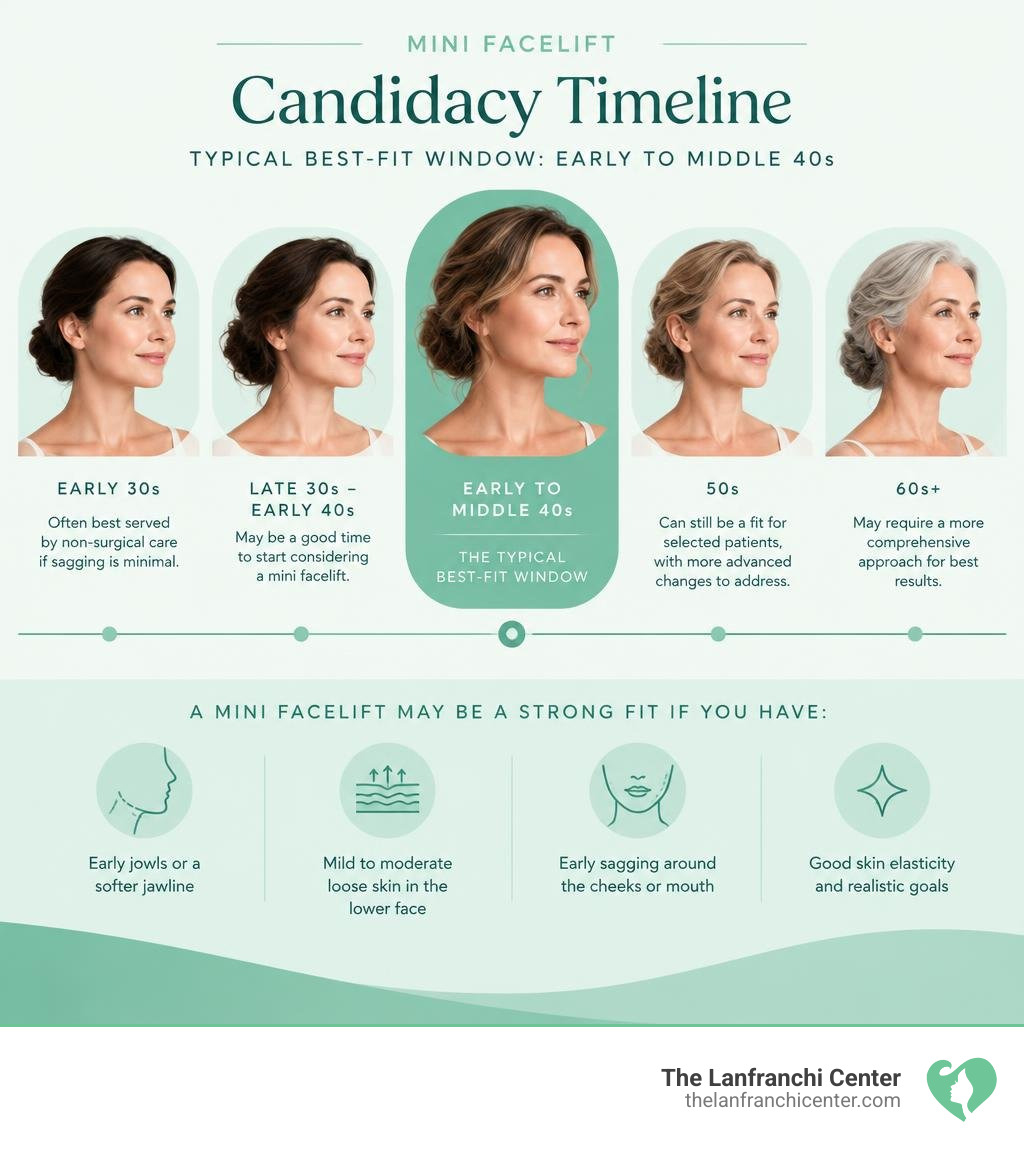
For many patients, the best age for a mini facelift is in the early to middle 40s. The right time depends less on a birthday and more on what is happening in the lower face and neck.
A mini facelift may be a strong fit when you have:
- Early jowls or a softer jawline
- Mild to moderate loose skin in the lower face
- Early sagging around the cheeks or mouth
- Good skin elasticity and realistic goals
Patients in their early to middle 40s often have enough laxity to benefit from surgery while retaining skin quality that supports a natural-looking result. Someone in their 30s may be better served by non-surgical care if sagging is minimal. Later in life, a mini lift can still help selected patients, but more advanced jowling, neck skin laxity, or muscle banding may call for a more comprehensive approach.
At The Lanfranchi Center, Dr. Lanfranchi’s trademark procedure is the TLC Lift™, a fully customized lower facelift and neck lift (including the SMAS layer and platysma muscle) performed under local anesthesia. With over 10,000 procedures completed in 20 years, it dramatically improves sagging jowls, under-chin fullness, drooping neck skin, and muscle banding by tightening both muscles and skin to reduce ‘turkey neck’ and re-establish a youthful jawline.
Determining the Best Age for a Mini Facelift
Facial aging rarely follows a rigid calendar. Two people who are both 43 years old can look remarkably different depending on genetics, sun exposure, bone structure, and lifestyle habits. As natural collagen production slows and supporting tissues soften, the cheeks and lower face can gradually lose definition.
This lower facial shifting creates the hallmark concerns that lead many individuals to explore lower face rejuvenation. Exploring the benefits of a mini facelift often helps patients understand how targeted structural lifting can restore balanced facial contours before deeper aging sets in.
| Aging Stage | Common Anatomical Characteristics | Ideal Surgical or Non-Surgical Focus |
|---|---|---|
| Early Facial Aging (30s to early 40s) | Subtle volume loss in the cheeks, fine lines, minimal skin laxity | Non-surgical injectables, skin resurfacing, preventative skin care |
| Early to Moderate Facial Aging (early to middle 40s) | Early jowling, softening jawline contour, deepening nasolabial folds, resilient skin elasticity | Mini facelift, targeted lower face rejuvenation, subtle structural repositioning |
| More Advanced Facial Aging (later 40s and beyond) | More pronounced jowls, neck skin laxity, platysmal muscle banding, significant volume depletion | A personalized evaluation to determine whether a more comprehensive lower facelift and neck lift is appropriate |
Early Signs of Aging Addressed by a Mini Lift
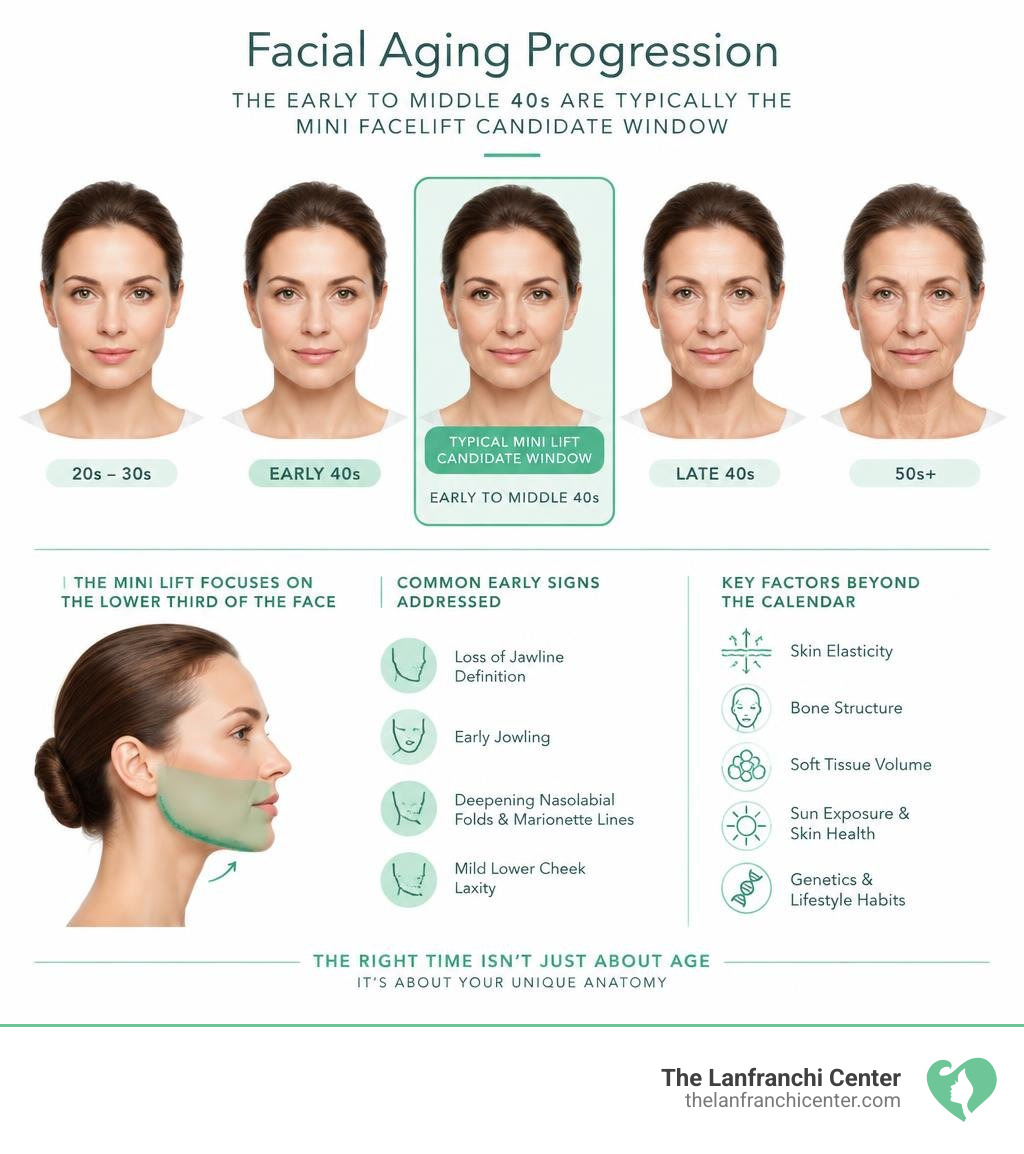
A mini facelift focuses primarily on the lower third of the face. It is not designed to alter your entire appearance or change your upper face; rather, it cleans up early structural blurring along the perimeter of the face.
The most common early signs of aging addressed include:
- Loss of Jawline Definition: The sharp, crisp angle of the lower jaw softens as cheeks descend.
- Early Jowling: Small pockets of tissue begin to disrupt the smooth continuity of the jawline.
- Deepening Nasolabial Folds and Marionette Lines: Downward tissue migration deepens the creases extending from the nose to the mouth corners.
- Mild Lower Cheek Laxity: Loose tissue creates a tired or drawn appearance, even when a person is well-rested.
Understanding the traits of ideal candidates for a mini facelift makes it clear that candidates with mild to moderate tissue displacement see the most refined improvements.
Is Your Age the Best Age for a Mini Facelift? Key Factors Beyond the Calendar
When evaluating whether you are ready for a procedure, facial specialists look past your driver’s license to examine anatomical readiness. Several core biological factors dictate candidate suitability:
- Skin Elasticity: Skin with good snap-back quality conforms smoothly over repositioned underlying tissue, creating an organic, un-pulled outcome.
- Bone Structure: Strong cheekbones and a defined mandibular line offer natural support anchors for elevated tissue.
- Soft Tissue Volume: Having adequate facial fat prevents a hollow or overly tight postoperative appearance.
- Sun Exposure and Skin Health: Severe sun damage can break down dermal integrity, sometimes requiring skin-smoothing treatments alongside structural lifting.
- Genetics and Lifestyle Habits: Smoking, stress, weight fluctuations, and family traits all influence the rate at which facial tissues descend.
Taking these personal elements into account will help reveal whether you are a candidate for a mini facelift.
Mini Facelift Candidates Across Different Decades

Because facial tissues change progressively, aesthetic goals and biological readiness vary across each decade of life.
Mini Facelifts in Your 30s: Preventative or Premature?
Patients in their 30s often notice the very first hints of facial fatigue. In most cases, these changes stem from minor volume loss or superficial skin texture changes rather than true muscular descent. For the vast majority of thirty-somethings, surgery is premature.
Non-surgical solutions such as dermal fillers or laser treatments generally provide excellent volume restoration and skin smoothing without the need for incisions. However, in rare instances involving significant weight loss or genetic predispositions to heavy lower cheeks, an evaluation can determine if a patient is an outlier. For most, learning whether your 30s is too soon for a mini facelift confirms that non-invasive maintenance remains the gold standard in this decade.
Why the Early to Middle 40s Are Often the Best Age for a Mini Facelift
For this practice, the early to middle 40s are often the sweet spot for mini facial rejuvenation. During this window, early jowls and jawline softening may be visible, while the skin often still has the elasticity needed to redrape smoothly after lower-face lifting.
Choosing surgery at this stage can offer distinct advantages:
- The procedure can address early structural changes before laxity becomes more extensive.
- Skin quality may support a refined, natural-looking result.
- Patients can restore jawline definition while their concerns remain focused in the lower face.
Reviewing expert guidance on the best age for a facelift confirms that candidacy should be based on facial anatomy and goals, not age alone.
Mini Facelifts Later in Life: When to Consider More Comprehensive Options
Patients later in life frequently visit cosmetic practices seeking facial refreshment. While healthy tissue at any age can be operated on, mini lifts have clear anatomical limits.
When aging involves more advanced skin laxity, deeper muscular sagging, or prominent vertical platysmal banding in the neck, a mini lift alone may not create a balanced result. Comparing a mini facelift vs full facelift helps patients understand why deeper tissue repositioning and comprehensive neck lifting may deliver more harmonious rejuvenation.
Procedural Differences: Mini vs. Full Facial Rejuvenation
Understanding how techniques differ ensures you choose the procedure designed for your specific anatomy.
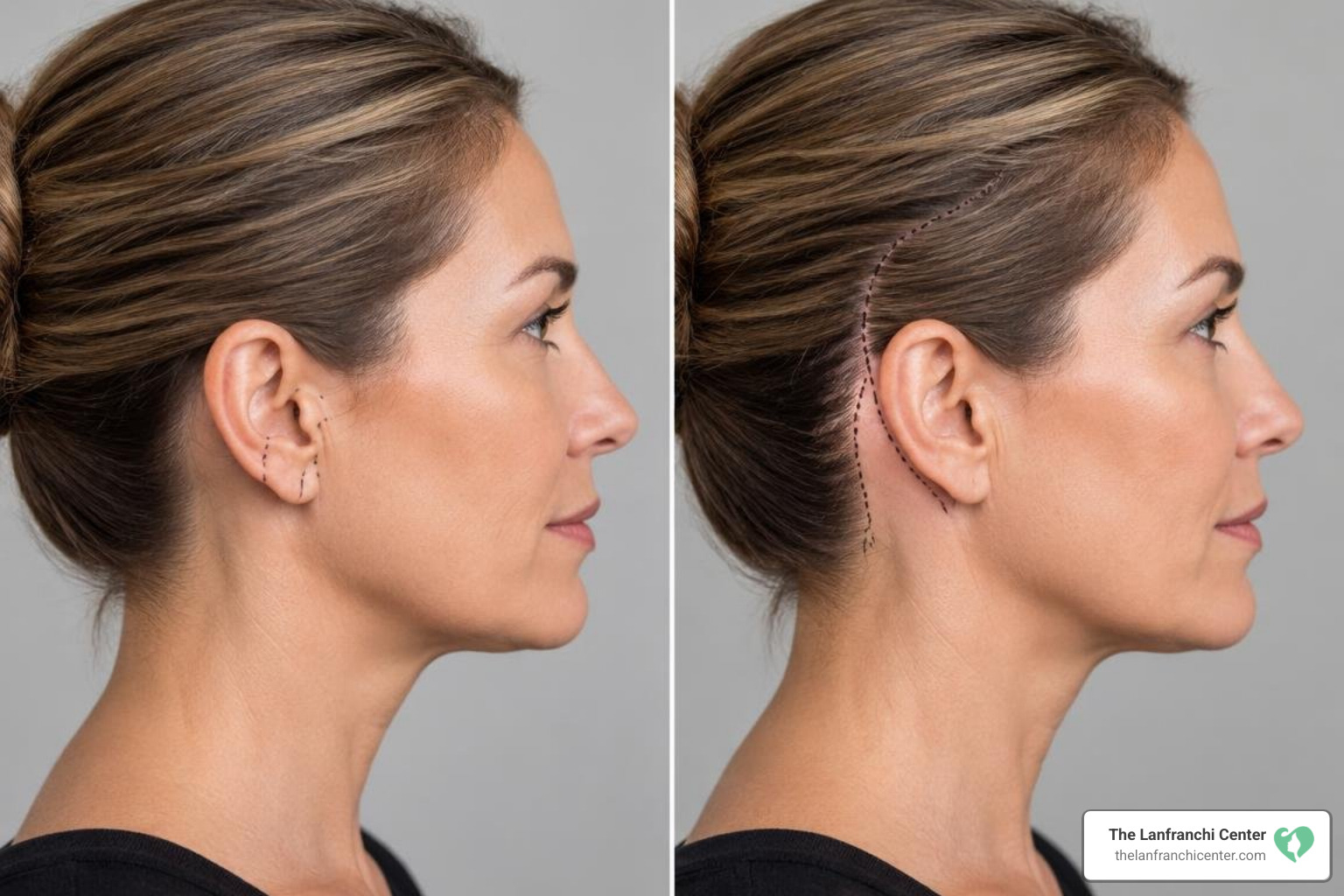
A mini facelift utilizes smaller incisions placed inconspicuously around the natural contours of the ear. The surgeon gently lifts the skin, tightens the underlying superficial muscular aponeurotic system (SMAS) layer to elevate the lower cheek and jawline, removes redundant skin, and closes the incisions with fine sutures. Because the dissection is focused, the surgery can be performed comfortably using local anesthesia with gentle oral relaxation, avoiding the grogginess and risks of general anesthesia.
Comprehensive lifts, by comparison, extend incisions beneath the chin and behind the ear into the hairline to address extensive neck muscle separation and deeper tissue descent.
Recovery Timeline and Longevity Expectations
One of the greatest appeals of a targeted mini lift is the streamlined healing period. Most patients navigate a comfortable 5 to 10 day initial recovery window. Mild swelling and bruising typically peak within the first 48 to 72 hours before rapidly fading. Most individuals feel confident returning to social activities, desk work, and daily routines after about one week.
Understanding the full recovery timeline for a mini facelift allows patients to plan their schedules with confidence. In terms of longevity, while surgery cannot stop the biological clock, a well-performed procedure resets it. Examining data on how long a mini facelift lasts shows that most patients enjoy their refreshed jawline contours for up to 5 to 10 years, particularly when paired with high-quality sun protection and healthy habits.
Questions to Ask During Your Facial Rejuvenation Consultation
When sitting down with a facial specialist in Las Vegas or Henderson, having targeted questions prepared ensures a productive, informative consultation:
- Based on my tissue tone and skin elasticity, am I an ideal candidate for a mini lift, or would a comprehensive lift provide better harmony?
- How do you address the underlying SMAS layer rather than just pulling the skin?
- What type of anesthesia do you recommend to keep me comfortable and safe during surgery?
- What are realistic expectations for my jawline and neck definition based on my bone structure?
- How long can I expect my personal results to last with proper skin maintenance?
Frequently Asked Questions About Mini Facelift Age
Can you be too young for a mini facelift?
Yes. Individuals in their 20s or early 30s rarely possess the structural sagging or lower cheek laxity necessary to justify surgical incisions. In young patients with minimal skin laxity, non-surgical approaches, targeted skin treatments, and preventative skin care yield beautiful improvements without unnecessary surgery.
What happens if you get a mini facelift too late in life?
Undergoing a mini lift when you have significant loose skin or separated neck muscles often leads to under-correction. Because a mini procedure does not comprehensively correct heavy neck laxity or platysmal bands, the rejuvenated jawline may clash with an untreated, sagging neck, creating an unnatural, mismatched appearance.
How many years does a mini facelift take off your appearance?
While individual results vary based on tissue health, patients frequently report looking 5 to 10 years younger. By restoring a clean jawline and smoothing early jowls through proper SMAS elevation, the procedure provides a refreshed, naturally well-rested aesthetic rather than an altered or pulled look.
Conclusion
Finding the right time for facial rejuvenation is a personalized journey that balances biological tissue quality, personal goals, and expert surgical artistry. For many patients, the early to middle 40s are an ideal window to address early jawline softening and jowling, but true candidacy is written in the contours of your jawline, neck, and cheek support.
For patients in Las Vegas, Henderson, and across the Las Vegas Valley seeking natural, long-lasting rejuvenation, The Lanfranchi Center offers an unparalleled focus on facial aesthetics. Dr. Lanfranchi’s trademark procedure, the TLC Lift™, is a fully customized lower facelift and neck lift performed under local anesthesia that addresses both the SMAS layer and platysma muscle. With over 10,000 procedures completed in 20 years, it dramatically improves sagging jowls, under-chin fullness, drooping neck skin, and muscle banding by tightening both muscles and skin to reduce “turkey neck” and re-establish a youthful jawline.
To explore whether you are at the ideal stage for lower facial rejuvenation, schedule a consultation for a mini facelift procedure with our dedicated team today.