The Ultimate Guide to Understanding Your Under-Eye Baggage
September 25, 2026
What Is an Eye Bag? A Clear, Simple Answer
What is eyebag puffiness? Here’s the short answer:
Eye bags are mild swelling or puffiness beneath the lower eyelids. They form when the tissues and muscles around your eyes weaken with age, allowing fat to shift forward into the lower lid area and fluid to collect underneath.
Key facts at a glance:
- What they are: Soft, puffy bulges under the lower eyelids
- Primary cause: Age-related weakening of eyelid support structures
- Other causes: Fluid retention, poor sleep, genetics, allergies, smoking, high salt intake
- Who gets them: Anyone, but they become more common with age
- Are they dangerous? Rarely. They are usually a cosmetic concern, not a medical emergency
- Can they be treated? Yes, through lifestyle changes, non-surgical procedures, or surgery
You’ve probably noticed it yourself. You wake up, look in the mirror, and something looks off. The skin under your eyes looks heavier, puffier, more tired than you actually feel. That’s the hallmark of under-eye bags, and you’re far from alone.
They’re one of the most common facial aging concerns among adults, and while they’re almost never a serious health issue, they can make you look more fatigued and older than you are.
I’m Dr. Paul Lanfranchi, a facial plastic surgery specialist with over 20 years of experience and more than 10,000 procedures performed, including lower eyelid blepharoplasty, which is one of the most effective surgical solutions for what is eyebag puffiness that won’t respond to lifestyle changes. In this guide, I’ll walk you through everything you need to know, from what actually causes eye bags to when it’s worth considering professional treatment.
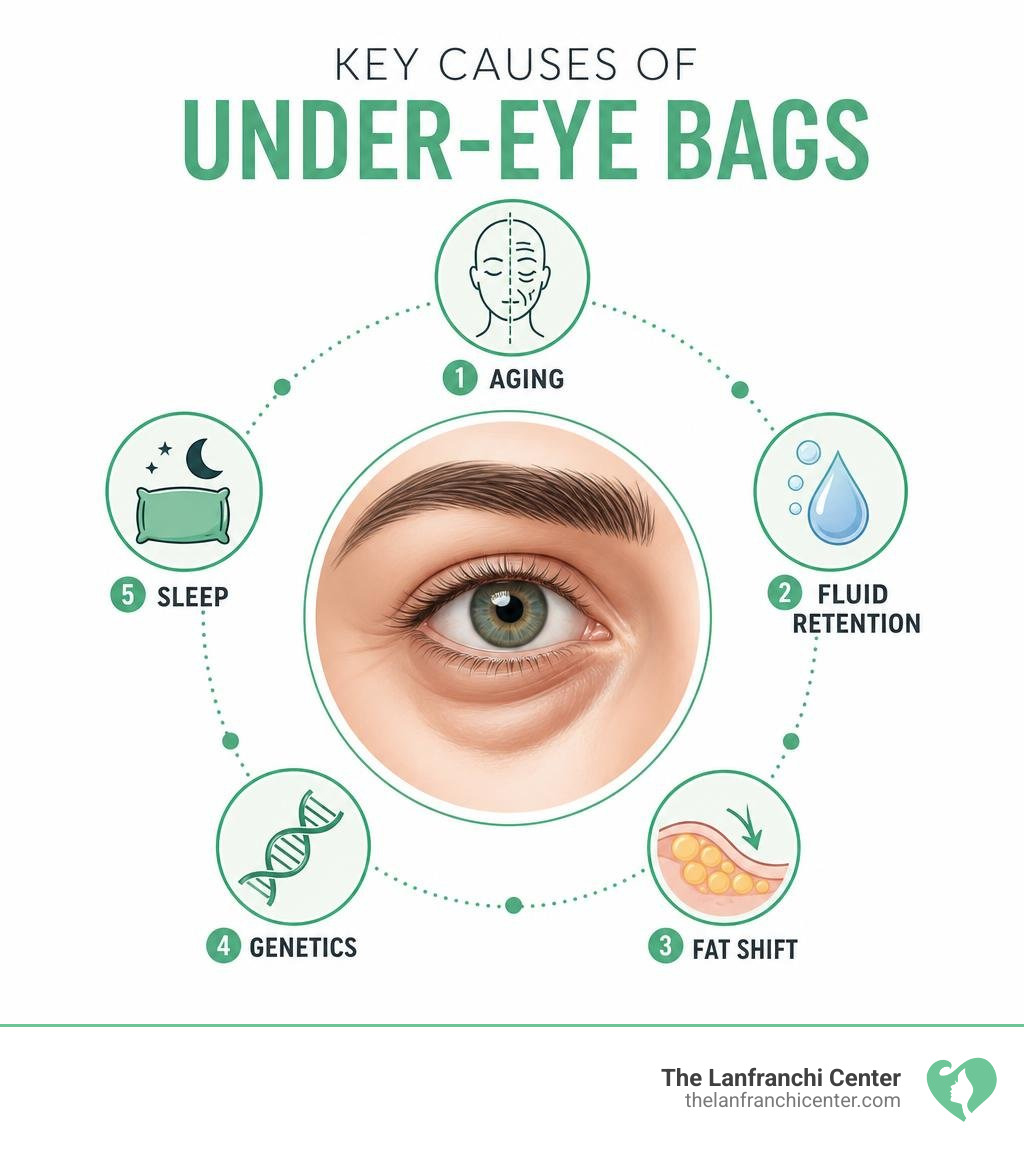
What Is Eyebag Puffiness: Causes, Symptoms, and Risk Factors
To understand under-eye swelling, it helps to look beneath the surface. The delicate lower eyelid depends on a balance of skin elasticity, muscular support, structural fat, and a smooth transition from the lower lid to the upper cheek. When one or more of these elements changes, under-eye bags can become more noticeable.
While many people assume a sleepless night is the sole trigger, true structural eye bags are primarily driven by natural changes over time. For detailed medical guidance, review the Mayo Clinic guide on bags under eyes.
What Is Eyebag Formation in the Lower Eyelid?
To understand how bags develop, it helps to understand lower-eyelid anatomy. The area around the eye contains protective fat. In a youthful face, a thin membrane called the orbital septum helps keep this fat behind the lower eyelid.
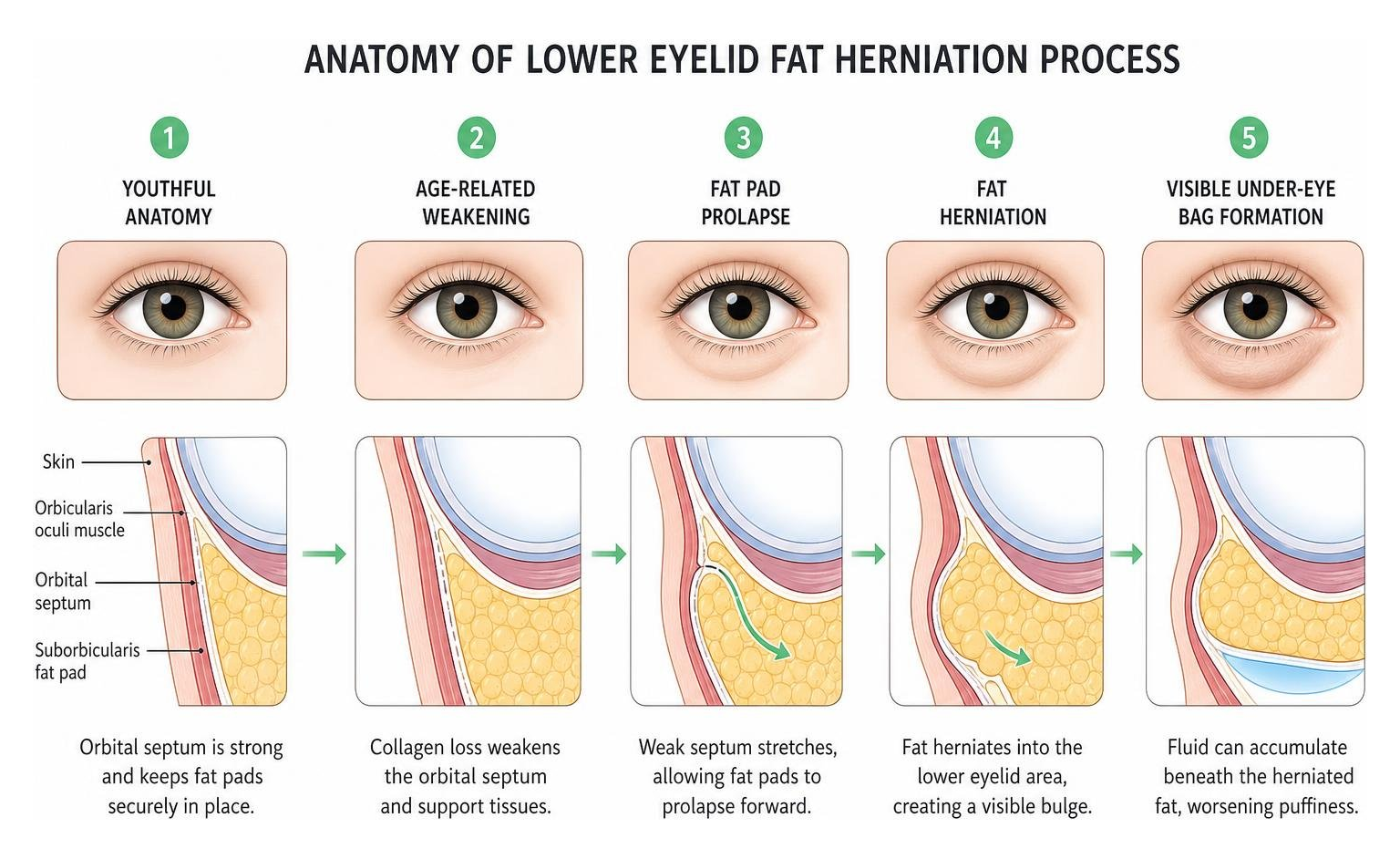
As we age, two related changes can occur:
- Collagen loss and tissue laxity: Skin loses firmness, and the orbital septum can gradually stretch and weaken.
- Fat migration: As that support weakens, natural fat pads can push forward, creating visible fullness beneath the eyes.
Are You a Candidate for a Lower Blepharoplasty?
Lower-eyelid aging usually involves one, two, or all three of these concerns:
- Persistent puffiness or eye bags: Forward-projecting lower-eyelid fat can create a constant puffy appearance.
- Skin quality and wrinkling: Loose or crepey lower-eyelid skin may contribute to an aged or tired appearance.
- The lower lid-to-cheek relationship: A hollow transition between the lower eyelid and upper cheek can create shadows that make bags look more pronounced.
The combination of these concerns helps determine the right treatment plan. Lower blepharoplasty can flatten or reposition prominent fat pads. When excess wrinkling is the main issue, fractional CO2 laser resurfacing may be considered for appropriate patients, particularly those with light to olive skin tones. When hollowness is the primary concern, soft-tissue filler or fat transfer may help smooth the lid-cheek transition. In some cases, combining treatments provides the most balanced result.
Dr. Lanfranchi will review your goals and anatomy during an examination to recommend the option, or combination of options, most likely to benefit you. When patients ask us what is a blepharoplasty, we explain that it is a targeted procedure designed to address structural lower-eyelid fat changes.
Primary Symptoms and Common Risk Factors
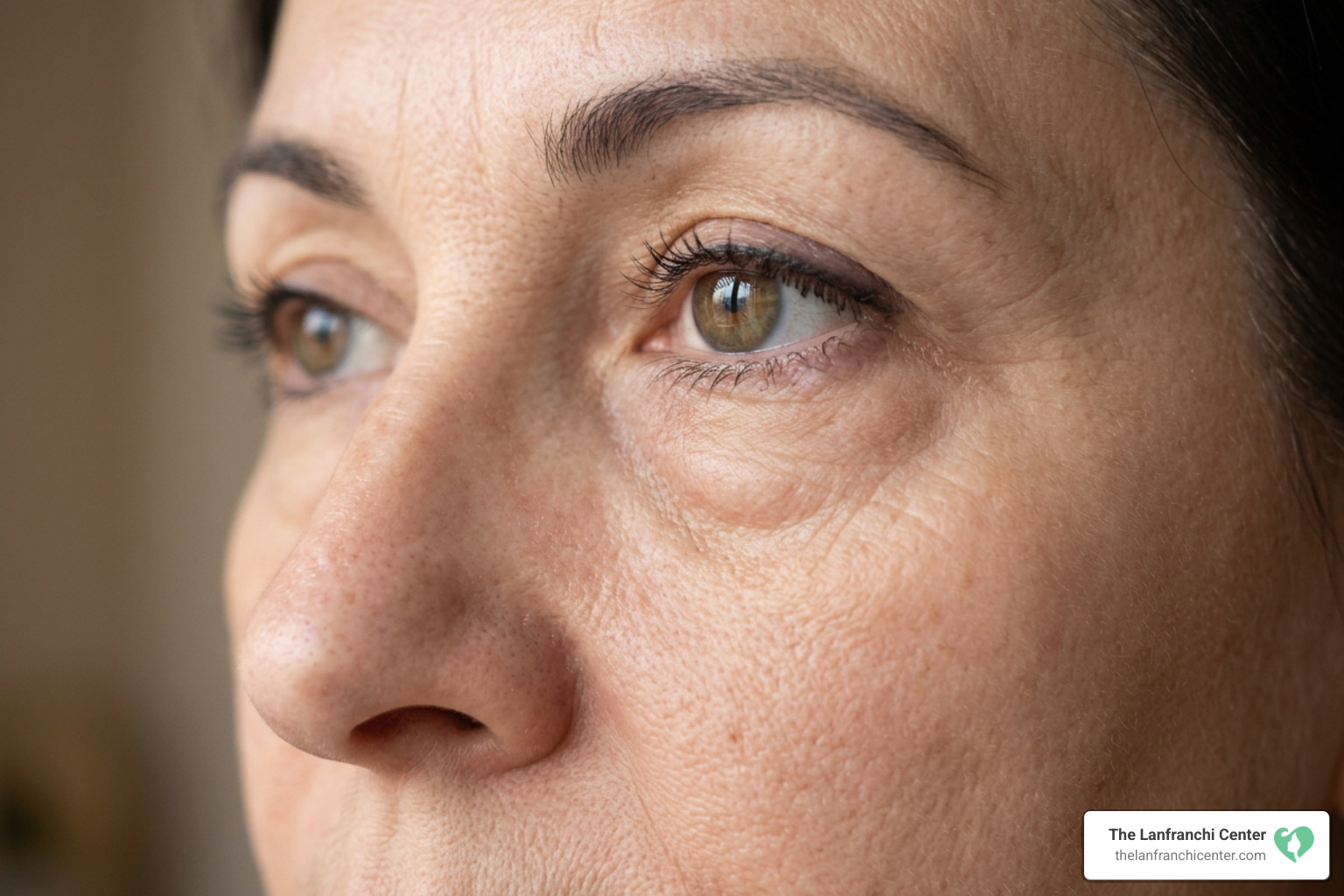
Common signs of under-eye bags include:
- Mild, persistent swelling or softness under the lower lash line
- Loose, saggy, or delicate crepey skin
- Pooled fluid that worsens after lying flat overnight
- Shadows that create a tired appearance
While age is the leading factor, several risk factors can make lower-eyelid puffiness more noticeable:
- Genetics: Family history can influence whether prominent lower-lid fat pads appear earlier in life.
- Dietary sodium: Excess salt can contribute to fluid retention around the eyes.
- Inadequate rest: Sleep loss can make fluid accumulation and dark under-eye shadows more visible.
- Environmental stressors: Tobacco smoke and UV exposure can damage collagen and weaken skin support over time.
Dark Circles vs Shadows: Understanding Under-Eye Discoloration
One of the most frequent points of confusion among our patients in Las Vegas, Henderson, and across the Las Vegas Valley is differentiating between dark circles and true eye bags. While they often appear together, their underlying causes are completely different. The American Academy of Ophthalmology explanation of eye bags emphasizes that treating under-eye issues effectively requires diagnosing whether the culprit is skin pigment, visible blood vessels, or physical contour bulges.
What Is Eyebag Shadowing Compared to Hyperpigmentation?
True periorbital hyperpigmentation refers to an actual increase in melanin pigment within the skin itself. This is particularly common in individuals with darker skin tones or those with chronic seasonal allergies. Skin thinning can also expose tiny underlying blood vessels, giving the lower lid a purplish or bluish hue.
By contrast, eyebag shadowing is an optical illusion created by light reflection. When fat pad protrusion creates a bulge, or when age-related volume loss creates a tear trough deformity (a hollow groove between the cheek and lower eyelid), light hitting your face from above casts a distinct shadow underneath the bulge.
When evaluating options, knowing what does a lower eyelid lift treat helps clarify that surgery smooths out physical bulges and shadows, whereas topicals or lasers address surface pigmentation.
Effective Home Remedies and Lifestyle Modifications
If your lower lid puffiness is caused by fluid retention or occasional late nights rather than structural fat herniation, simple at-home interventions can yield noticeable improvements.
Natural At-Home Solutions
For mild or temporary periorbital swelling, we recommend trying conservative remedies first:

- Cold Compresses: Applying a cool, damp washcloth, chilled tea bags, or a cold spoon with light pressure for 5 to 10 minutes constricts blood vessels and reduces fluid pooling.
- Head Elevation: Sleeping with your head slightly elevated on an extra pillow prevents gravitational fluid redistribution while you sleep.
- Topical Skincare: Serums containing caffeine can temporarily constrict micro-blood vessels, tightening the surface skin.
- Hydration and Sodium Management: Drinking plenty of water while lowering daily dietary salt encourages your body to release stored fluids.
If you are wondering how can I get rid of bags under my eyes, establishing a consistent routine around sleep hygiene, allergen control, and sun protection is an excellent first step.
Medical Triggers and Systemic Factors
It is essential to note that under-eye puffiness can occasionally point to systemic health issues rather than standard cosmetic aging:
- Thyroid Eye Disease: Autoimmune conditions affecting the thyroid can cause orbital muscle and tissue inflammation.
- Renal Edema: Kidneys that retain excess water and salt can manifest early swelling around the eyes.
- Chronic Allergies: Histamine release causes inflammation, fluid accumulation, and eye rubbing, which further breaks down delicate skin tissue.
- Nicotine Use: Smoking destroys native collagen and impairs micro-circulation, thinning the skin rapidly over time.
Professional Treatments: Medical Therapies and Surgical Solutions
When lifestyle changes fall short because the main concern is structural fat displacement, skin laxity, or a hollow lower lid-to-cheek transition, professional treatment may be appropriate. Knowing how can I remove bags under my eyes permanently starts with identifying which of these concerns is present.
Non-Surgical Cosmetic Options
Non-surgical treatments can help when bags are mild or when wrinkling and hollowness contribute more to the appearance than protruding fat:
- Soft-tissue fillers or fat transfer: Adding volume to a hollow tear trough or upper cheek can soften the transition between the lower lid and cheek, reducing shadows. These treatments do not remove lower-eyelid fat.
- Fractional CO2 laser resurfacing: For appropriate patients, particularly those with light to olive skin tones, laser resurfacing can improve the appearance of fine lines and lower-eyelid skin texture. A personalized assessment is important because skin tone and healing characteristics affect treatment selection.
One or more treatments may be recommended together when puffiness, wrinkling, and hollowness occur at the same time.
Surgical Fix: Lower Eyelid Blepharoplasty
When persistent eye bags are caused by structural fat protrusion, lower eyelid blepharoplasty can remove or reposition the fat pads to create a smoother contour.
At The Lanfranchi Center, lower eyelid lifts are performed using gentle local anesthesia. With a transconjunctival approach, the incision is placed inside the lower eyelid, allowing fat to be removed or repositioned without an external scar. When loose skin is also present, a small incision beneath the lash line may allow excess tissue to be carefully refined.
Dr. Lanfranchi will assess your eye bags, skin quality, and lid-cheek contour, then discuss which option is most likely to meet your goals. Patients typically have a 5- to 10-day initial recovery window before returning to normal social activities, although it can be as short as 3 or 4 days. To explore the procedure in more detail, see our guide on the surgical solution for under-eye bags.
Frequently Asked Questions About Under-Eye Bags
When should I see a healthcare provider for under-eye bags?
While under-eye swelling is usually a benign cosmetic issue, schedule a medical evaluation if you experience red-flag symptoms such as:
- Sudden, severe, or painful swelling around one or both eyes
- Vision changes, blurriness, or double vision
- Skin rashes, persistent redness, or discharge
- Puffiness in only one eye that appears suddenly
Can under-eye bags go away naturally?
It depends on the cause. Temporary puffiness related to a high-sodium meal, crying, seasonal allergies, or a poor night’s sleep may improve within hours or days as fluid balance normalizes. However, bags caused by age-related fat protrusion and weakened eyelid support generally do not disappear naturally without medical or surgical treatment.
Is lower eyelid surgery a permanent fix?
Lower eyelid blepharoplasty can provide long-lasting improvement. Once protruding fat pads are removed or repositioned, those specific fat cells do not return. Skin continues to age naturally, but many patients enjoy a smoother lower-eyelid contour for years. Learn more in our guide on how long a lower eyelid lift lasts.
What Is Recovery Like for a Lower Blepharoplasty?
Lower blepharoplasty often has a relatively short initial recovery compared with many facial procedures. Some people feel recovered within 3 to 4 days and return to normal social activities, although individual healing, swelling, and bruising vary.
When indicated, lower blepharoplasty may be considered for appropriate patients as early as their mid-30s. It can also be paired with an upper eyelid lift when both the upper and lower eyelids contribute to the concerns being addressed. During your consultation, Dr. Lanfranchi will review your goals and examination findings to determine whether a lower eyelid lift alone or a combined approach is the best fit.
Conclusion
Understanding what is eyebag puffiness is the first step toward choosing the right solution for your face. Whether your under-eye concerns are the result of temporary fluid retention, genetic traits, or natural age-related fat herniation, accurate knowledge gives you the power to restore a well-rested, vibrant appearance.
At The Lanfranchi Center, located conveniently for patients throughout Las Vegas, Henderson, and the greater Las Vegas Valley, we specialize exclusively in customized facial rejuvenation procedures. Our team takes a collaborative patient-partnership approach, using gentle local anesthesia to deliver natural, beautifully refreshed results without unnecessary downtime.
Ready to address under-eye baggage and reclaim a rejuvenated lower eyelid contour? Explore our lower eyelid lift solutions or schedule your personal consultation with us today.